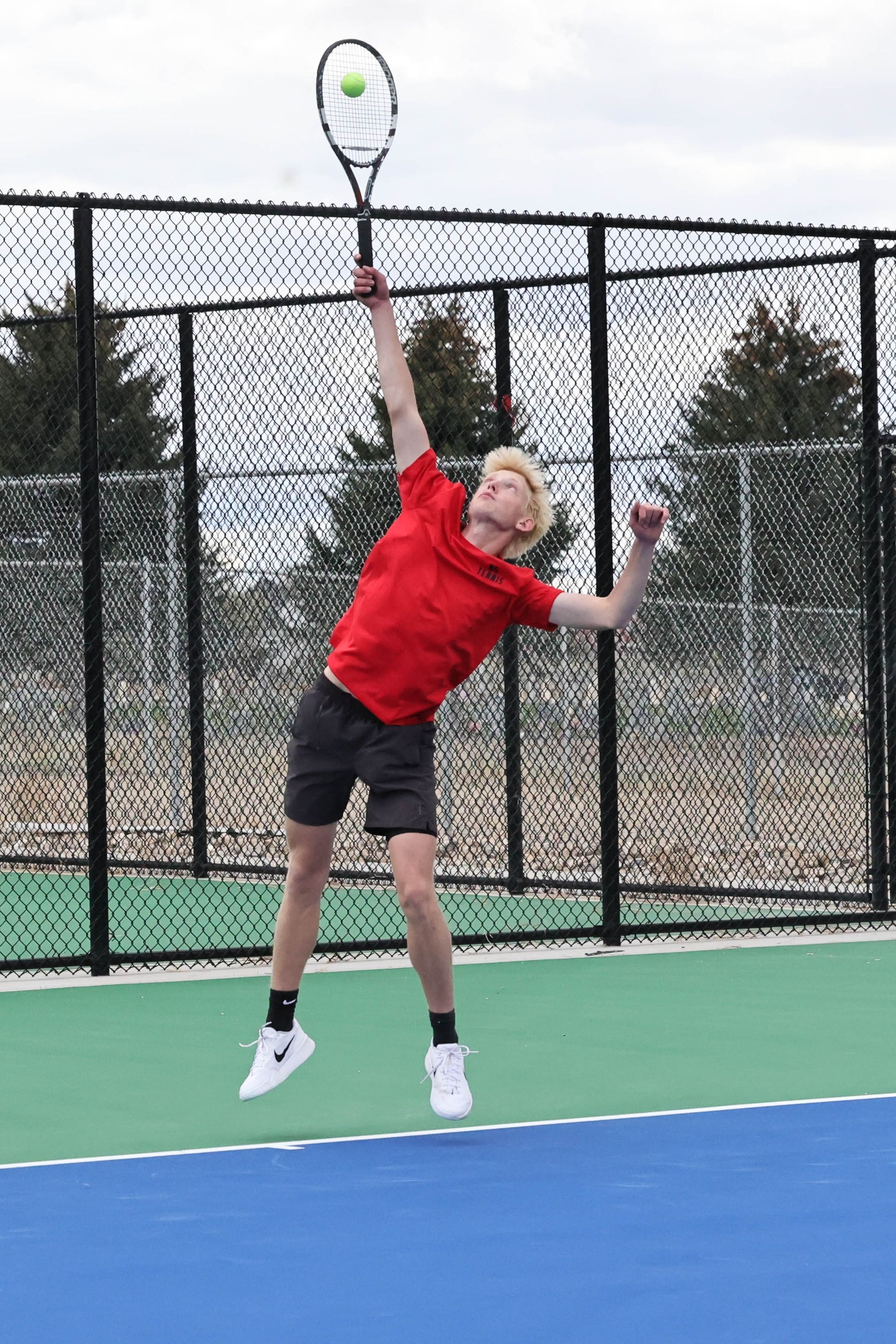
She wakes up and goes to her zero-hour class before school even starts. Then during the day, she attends higher level classes
through the college where she doesn’t even get to talk to her teacher face-to-face. After school, she has between two and three hours of practice depending on the season. Once she gets home, she doesn’t even have time to rest before she has to work on the farm taking care of animals and moving pipes. Most of the time she doesn’t even have time to work on any homework until she is dead-tired and wants nothing more than to go to bed.
This is the average day for junior Chesney Howard and many students at NS. This schedule has become more and more common.
In a recent NS Times survey, 55 percent of students said that they have felt that this school year has been harder emotionally and
academically, and 62 percent said that they feel that they or their classmates are more likely to be angry or distressed at school.
Some feel the reason for this difference is that the students themselves are losing joy for school and what it means to them or simply doing too much, which is leading to burnout.
“I feel like there's a group of students that are in everything,” senior Tyce Walker said. “They're involved in everything and the things that are involved in those groups expect a lot from them and then they are starting to lose the things they enjoy and they're just doing it for responsibility's sake.”
Beyond this, students have reported feeling less attached to school. In the 2025 NS Student Health And Risk Prevention (SHARP) survey, a survey done every two years to hear student opinion and assess risk factors, only 35 percent of students enjoyed coming to school and 66 percent of students felt that what they learned was not important for their lives.
While not every student may feel this way, the effect can affect those around them.
“Honestly, I feel pretty good,” Walker said. “I prioritize the things I love enough that I feel like I have a pretty good balance. My main thing is it’s just taking my friends; everyone is so busy.”
Not only have the students felt the change this year but staff as well.
“I guess just kind of off the top of my head, this year does feel different, but I couldn't pinpoint it,” social worker Cindy Lund said. “...It does feel different, that there's just maybe an extra layer of stress on students, for whatever reason.”
Most students face burnout in some form or another throughout high school. It can be caused by not taking breaks or becoming overwhelmed with work, school work or extracurricular activities.
“They are trying to do their best, but they kind of give up and so they get stuck in a rut or they don't want to do their work and it's
just overwhelming to have all of it come at once,” junior Shannon Jolley said. “And I think that has been hard.”
Burnout can be caused by lack of rest between activities and external stressors. Students who don’t sleep more than eight hours a
night are more likely to experience burnout.
“Something that is really a problem in our generation is that kids, they're going, going, going all day,” Jolley said. “They come home,
and now they have to go, go, go. … And then finally, like six, seven o'clock comes around. They finally get personal time. And so they use that. They stay up from six to midnight, finally having some personal time. And then now they get two hours of sleep. They have to wake up and go, go, go all day again.”
Screen time has a significant effect on sleep and specifically ruins quality sleep, according to the National Sleep Foundation. In the
SHARP survey results, 80 percent of students used a device for two or more hours a day and 60 percent said that screen time gets in the way of their sleep.
Lack of sleep can also lead to higher rates of emotional distress and depression. From the SHARP survey, in the past 12 months
42 percent of students felt hopeless or suicidal but did not feel like they could talk to anyone.
NS currently has funding from Project AWARE, a financial grant for mental health resources, to help students who are struggling to
get help.
“There's lots of things that we've been able to do,” Lund said. “We've got counseling resources through our project AWARE grant.
We've been able to, you know, connect students with. And so this year, well, the needs seem greater. I feel like we've got more
concrete supports in place than we've ever had, at least since I've been here.”
While not every student receives direct one-on-one counseling, many find that connection with teachers, staff or coaches.
“I have a lot of good people around me,” Howard said. “Coaches and my parents and friends, we all support each other. And if I am
struggling with chores, my parents will always help me out, or if I'm having a bad day at practice, my coaches are very understanding.”
Burnout is common but preventable for teenagers. With the right resources and connections, anyone can prevent it.
“You can say no, that is okay. It is okay to not do everything,” Walker said. “And please find time to still do the things you enjoy. I
know life is good. … Don't overwork yourself. Nothing, nothing good comes from it. Nothing.”